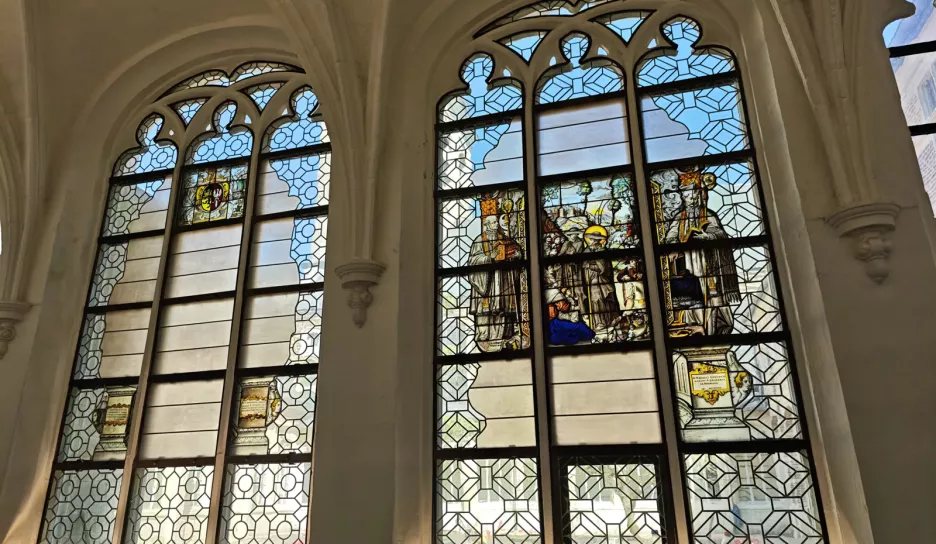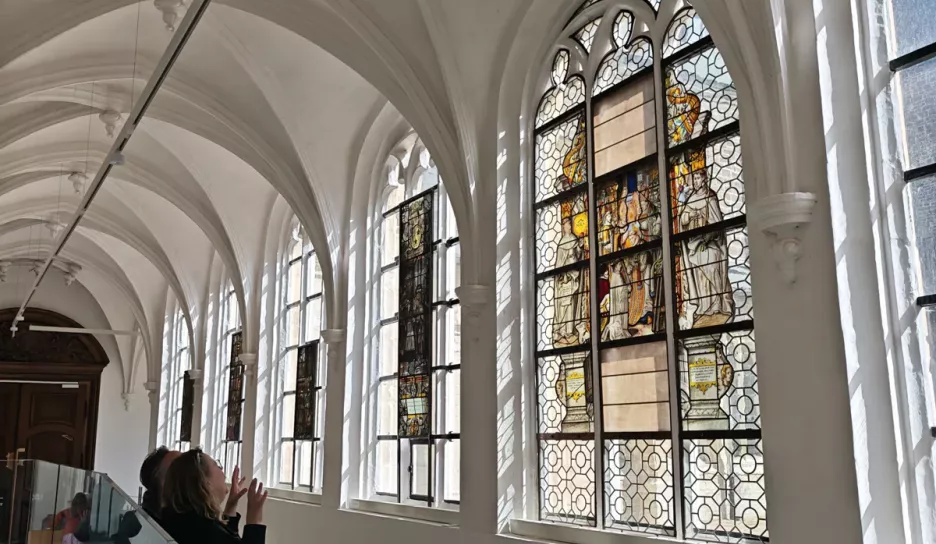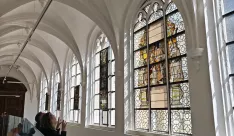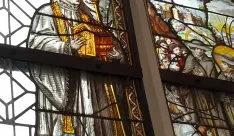

“This series of stained-glass windows is considered one of the best-preserved and most valuable collections of historic stained glass in the Southern Netherlands. In recognition of its exceptional artistic and historical value, the collection has been designated a Flemish Masterpiece. In addition to depicting the life of Saint Norbert, these highlights of the cloister corridor also tell their own story of loss and rediscovery,” says Stefan van Lani, curator of the abbey. “The fact that we can now bring so many panels back together in the very place for which they were created and prepare them for restoration marks an important step in preserving this heritage for the future.”
A remarkable feat of restoration and research
The stained-glass windows, created by master glazier Jean de Caumont, have had a turbulent history over the centuries. Several panels became scattered around the world, but a significant number have since been brought back to Leuven. Today, 20 central panels from the original series of 41 stained-glass windows have returned to the abbey site.
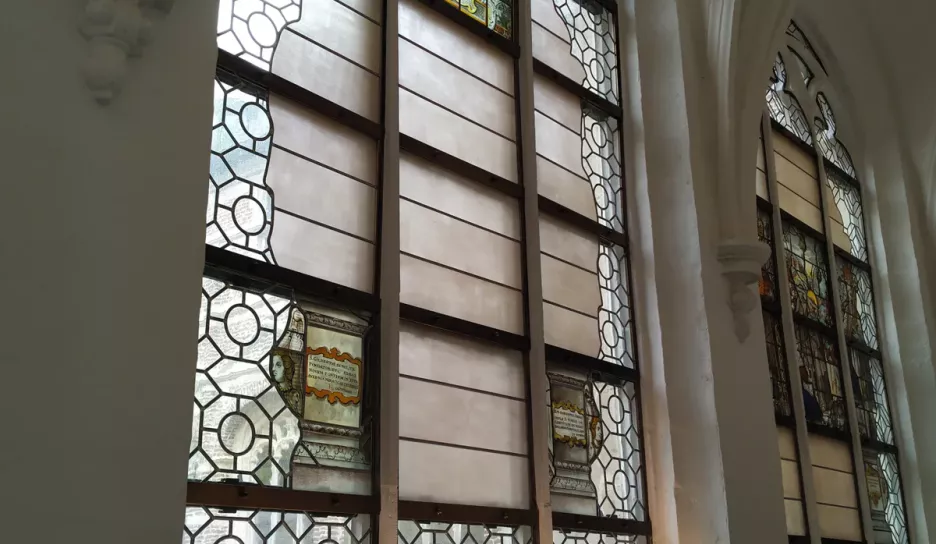
Restoring the stained-glass windows is a particularly complex undertaking. It requires painstaking research to determine which glass fragments originally belonged to which window and to identify the missing sections. Based on historical research and original designs, the original compositions are being reconstructed step by step.
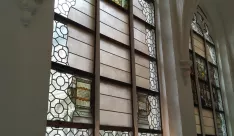
The trial restoration plays a crucial role in this process. It examined how different window sections could be reconstructed and identified the best approach to filling in missing parts of the stained glass and border glass. The deliberate choice has been made not to reproduce missing figurative sections literally, but to complete them with a contemporary interpretation that harmonises with the historical whole.
An essential first step towards presentation and preservation
In addition to restoring the historic glass, attention is also being given to how the stained-glass windows will be presented in the future. Research is underway into how the historic glass can be mounted on a new hanging structure on the interior side. Protective secondary glazing was already installed on the exterior in the past. This setup will help ensure the long-term preservation of the stained-glass windows.
These trial installations will inform the final presentation of the complete stained-glass collection, which is scheduled to return to the cloister corridor by 2029. The trial installations can currently be viewed in the cloister corridor at Museum PARCUM.
Collaboration and a vision for the future
The restoration is part of the multi-year subsidy agreement between the abbey and the Flemish Government. It is the result of close collaboration between the City of Leuven, the Flemish Government and the Park Abbey Heritage Site.
Following this trial restoration, the complete restoration plan will be developed further. The findings will provide the necessary basis for preparing the implementation dossier for the next phase of the restoration.
The ambition is to restore all available stained-glass windows by 2029 and reinstall them in the abbey's cloister corridor, in time for the 900th anniversary of Park Abbey.